Labfolder
Redesigning an ELN for scientists around the world
The Product
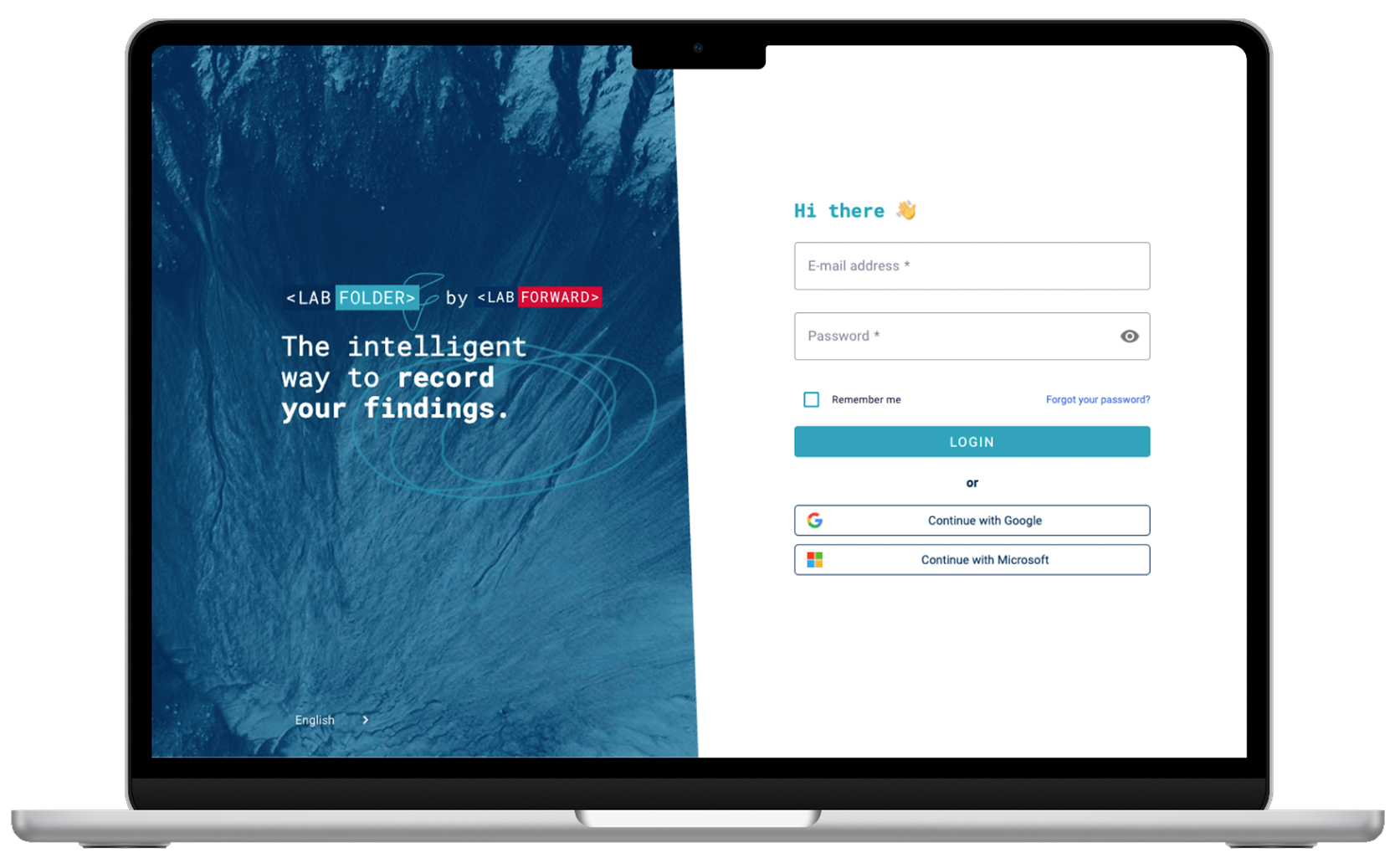
Labfolder is an Electronic Laboratory Notebook (ELN) that aims to be the paperless solution for scientists to their findings and scale their department's research. For years and years, laboratories around the world have not gone digital because of diverse concerns. But in the era of scaling science and making knowledge accessible within the labs, Labfolder plays an important role by making the recording of findings as easy and flexible as possible, while keeping all data safe.


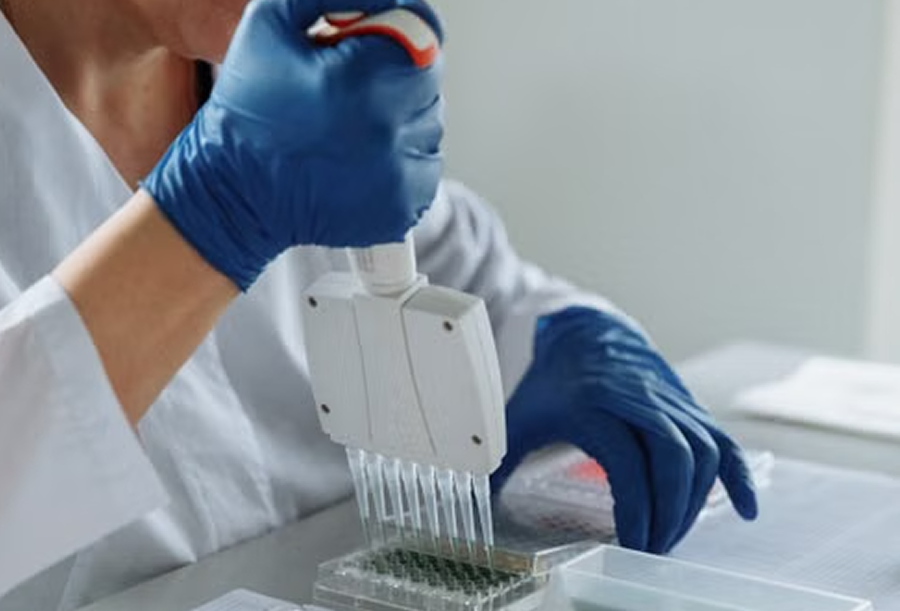
In technical terms, Labfolder is a web-based application to help scientists keep their data centralized while making it collaborative.The specialized format of the ELN allows the scientists to upload and visualize any type of format required in the lab, which also includes heavy, high-resolution images coming from microscopes and other lab devices, making it a powerful tool not to miss any detail in research.
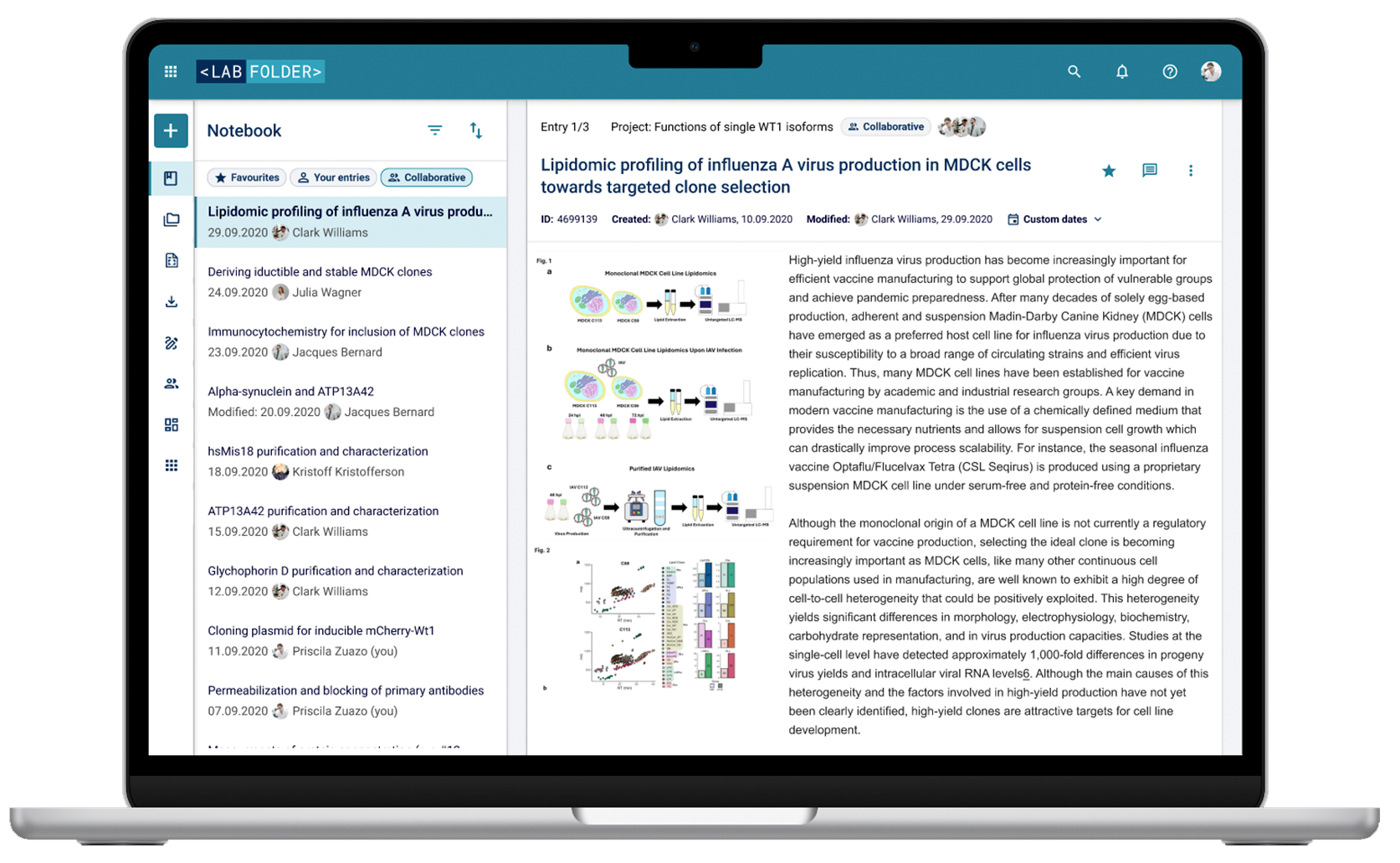
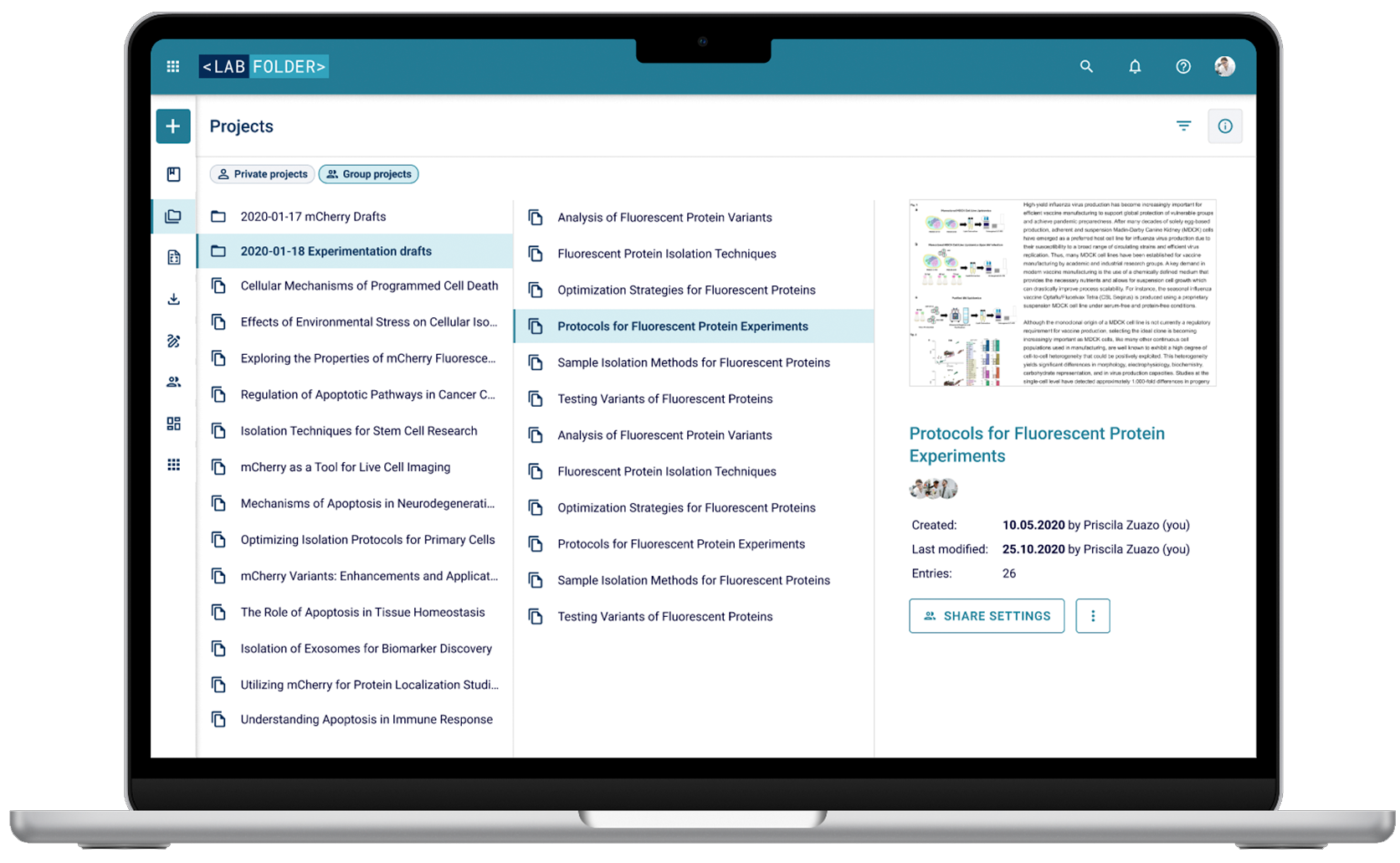
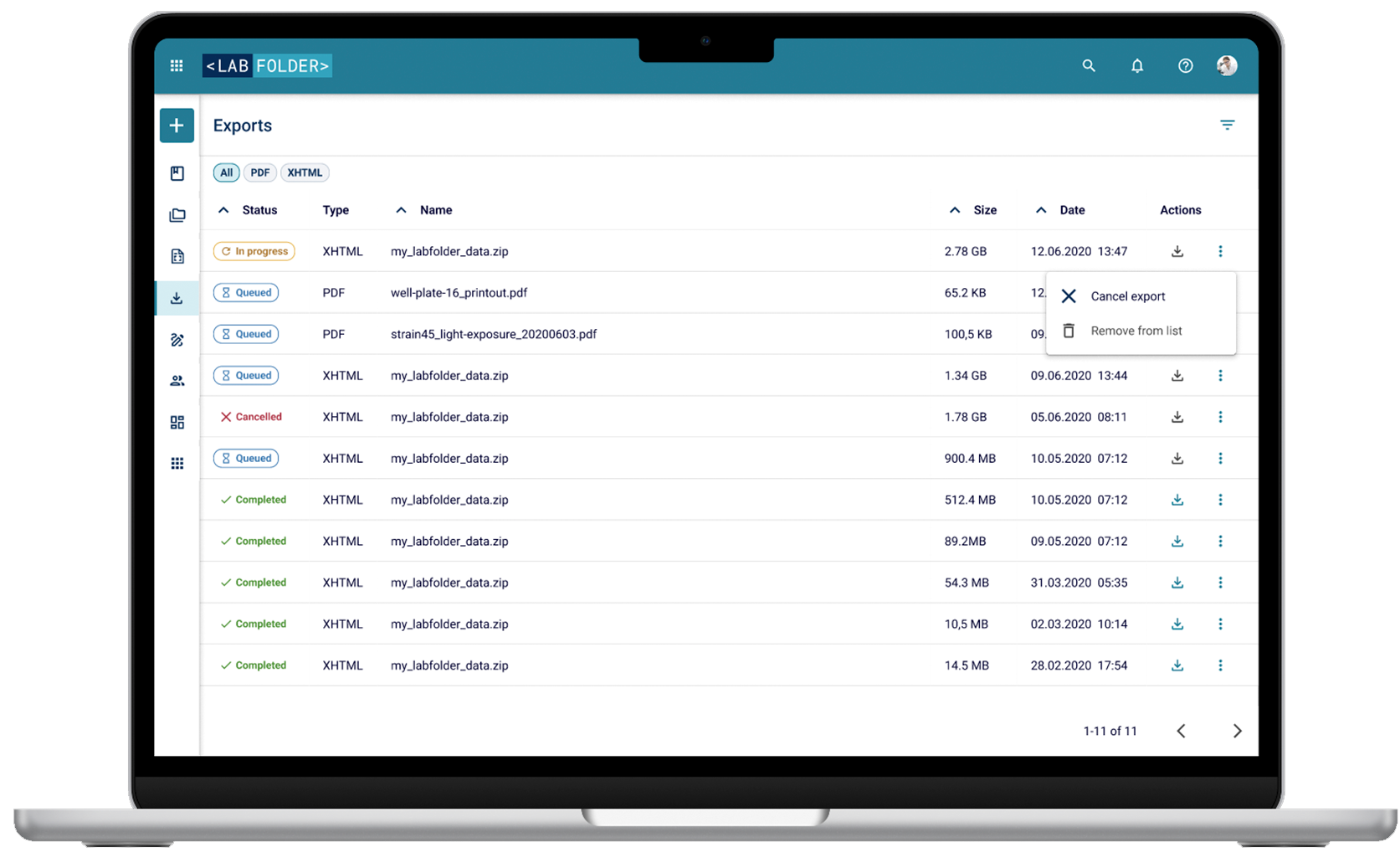
Here are some screens for quick browsing:
Project overview
| Company | Labforward GmbH |
| Product | Electronic Laboratory Notebook (ELN) Web App |
| Team | Product & Engineering Department → Product Team |
| Roles | Senior Product Designer I; Product Owner, UX Designer |
| Scope | UX, UI, design system, information architecture; product specifications |
| Tools | Figma, UXPin, Illustrator; Jira |
| Timeline | Nov 2019 - June 2022 |
I was in charge of redesigning Labfolder as the only design contributor in the team from 2015 to 2022.
The first milestone was the Notebook redesign, which included:
• Redesign of the user experience and user interface, including entry browsing, filtering, creating, hiding and sharing.
• Design from scratch of functionalities like a WYSIWYG text editor with LaTex support, an integration to a table editor with complex formula support, an integrated chemical formula drawer for chemistry purposes, a self-built file upload and visualization mechanism, as well as a self-built microwell plate editor for biology purposes to integrate with lab devices to read well plates.
The second milestone was the redesign of the collaborative aspect of the ELN, which was ruled by permission-based definitions and which included:
• Redesign of the group management experience
• Redesign of the project and template management experience
• Redesign of the data export mechanism and its experience
Business impact
One of the metrics to measure the impact of the redesign at the business level was the increase of active users on the quarter of the release:
💳 Registered users
50,919 as of Q3 2022
vs. 50,716 as of Q2 2022
🔑 Active users
48,233 (94.72%) as of Q3 2022
vs. 42,103 as of Q3 2022
Researchers and scientists of these insitutions were registered and active, among others: Anchor Diagnostics GmbH, BIH - Berlin Institute of Health, Ceva Animal Health, Charité - Universitätsmedizin Berlin, Daichi Sankyo, Ichor Life Sciences, Inc., ISTA - Institute of Science and Technology Austria, Johns Hopkins University, Gestlich Pharma AG, LMU - Ludwigs-Maximilian-Universität München, MPG - Max Planck Gesellschaft, Novalix, Olix Pharmaceutics, Technische Universität Cheminitz, UKE - Universitätsklinikum Hamburg-Eppendorf.
User impact
👍🏻 Simplified lab data entry
Through a new layout which was cleaner and more flexible, scientists and researchers reported that the experience to enter data and change its layout was significantly improved.
👌🏻 Clearer organization of projects, templates and folders
The experience to create and manage folders, templates, and projects was clearer through improving the design system, as buttons with text were found to be more helpful in the lab context. Also the flows were simplified to make them less "clicky".
🔎 Eased findability of entries and own information
Due to the new entry navigation, users perceived their entries were easily accessible so they could continue with their work right away without filtering or searching for them.